In March 2026, the World Bank took an extraordinary and bold step when it reversed its three-decades-long position on industrial policy, and is today backing it for growth and development. As the world fractures along geopolitics and trade, and while US President Donald Trump wages a war in Iran and slaps tariffs on several trade partners, the old world of free trade and globalisation is coming apart.
Industrial policy, once controversial, has returned. Simply, it is a government’s use of subsidies, tariffs and cheap credits to help grow a chosen few industries and sectors, in order to advance national growth and development. Countries such as the UK and the US in the 19th century, and South Korea, Japan, Singapore, China, and Taiwan after the Second World War, became rich by industrialising. To industrialise, each one of them used industrial policy in a form that suited them.
Economic history tells us that all paths to successful industrialisation go through industrial policy, but not all countries who use industrial policy succeed or industrialise. Recently, in an attempt to reignite manufacturing, India is deploying industrial policy in the form of production-linked incentives (PLI), where the government promises to reward manufacturers if they manufacture more locally.
Last month, when thousands of young people took to the streets in what came to be known as the “Cockroach protests”, it ignited a fierce debate about the lack of opportunities and jobs for the youth in India’s economy, and the failure of Prime Minister Narendra Modi to deliver on his promises of prosperity. Modi has said that India will become rich by 2047 but has not clarified how India will get there.
Also Read | Beyond the factory floor
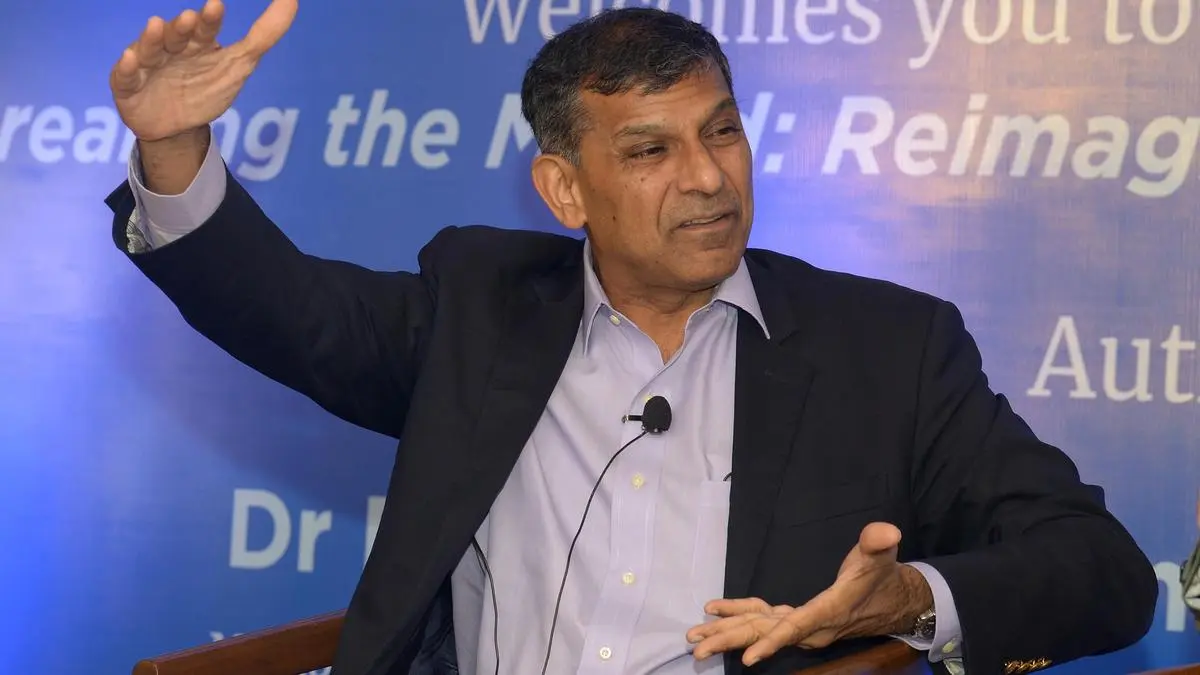
Raghuram Rajan, former Reserve Bank of India (RBI) governor and professor of finance at Chicago Booth School, spoke to Frontline on the burning questions and hard policy choices facing India’s economy. In 2024, in his book Breaking The Mold, written with Rohit Lamba, Rajan said that rather than making another attempt at industrialising, India should adopt a services-driven economic model to become rich. A services-driven economic model has no precedence of success in history, and the path is fraught with risks, but Rajan told Frontline that it “is riskier to try to depend on a model which is already past its use-by date”. Excerpts:
Last month, the “Cockroach protests” by young Indians stunned the country. It was about corruption in the education sector, but it was also about a broken ladder of opportunity in the country’s economy. What were your feelings while you were watching the protests happen?
It is not so much about why it is happening. To some extent the question is why hasn’t this explosion happened before. You can see the frustration building in young people with the lack of jobs, the low level of labour force participation, and even with the very modest level of female labour force participation. There is this worry everywhere that we are not creating enough jobs. And for a long time people like myself have been warning about the powder keg that’s building if we do not create good jobs.
Obviously the direct concern is these tests that have been leaked and the fact that they have to repeat the tests. I can imagine the trauma that you go through: you have just finished the paper, you have done reasonably well, and then you think that “oh, I have to repeat it again! How terrible!” You have to study again because you can’t keep it all in your memory, and these are kids who have been working for 3-4 years for that particular exam. There is a lot of frustration in this because there are families’ hopes embedded into it. Just think about the fact that the success rates in these exams is minuscule.
The private sector is not creating enough jobs. There was a time when we had the first blush of economic liberalisation. Suddenly the private sector jobs became very exciting and lots of people wanted to join it. I find it extremely worrying that civil services jobs have now come back to be on top of people’s minds as a good job as opposed to a job where you want to do public service. In the 1980s, when I left college, the jobs in the private sector were perking up, and the civil services was something for people who really had a desire to do public service. Now it seems to be the job that everybody wants.
The economy has been plagued with youth unemployment and underemployment for years. This is largely because India failed to structurally transform—a large agrarian economy skipping industrialisation and dashing straight into skilled services. Going back in time, do you think this was because we made big policy errors or the world was just different when India got its chance?
I think a bit of both. The one thing where we seriously lag behind China—and we opened up our economy 10 years after China did—is education. We under-educated our people, which is strange given we are a democracy. You would think we would provide people public services but we under-educated our people, and relative to China we were much behind when we liberalised. Economic liberalisation increased the demand for skills and education became more front and centre, something the politicians wanted to deliver for people.
But it’s just terrible that we didn’t invest enough in primary and secondary education then. Now I fear what we are in danger of doing is under-investing in quality education. We had, for instance, the IITs, which were near the top, but they stayed there. And we haven’t got these really strong research-creating universities.
We have left our IITs to find funds for itself because we want to spread the money around elsewhere, and as a result we have a lot of colleges but very few really good ones. You can count them on your fingers; basically we have the same ones that we had 20 years ago. Earlier we under-invested in primary and secondary education. Now we are under-investing in tertiary education.
The fact is the world has moved on to where you need to compete in the realm of ideas. And India is lagging behind here. Every day your newspaper or some other papers will point to some successes, and I have immense faith in our youth that they will produce those successes but these are far below what we could do if we engaged fully.
That’s the tragedy. Right now we are trying to get on to the previous bus, which is low-skilled manufacturing. That bus has left the station. Get on to the next bus. We are sort of so blinkered in our vision that we are not doing that. Again, everybody is trying but we need a vision about what we want to do.
And the vision seems to be that manufacturing is the way out.
I don’t see that vision playing out given there’s tremendous automation in manufacturing, so it is not going to create that level of jobs. You are no longer competing with the US or Europe for those jobs, you are competing with China and Vietnam, and the wages there are no higher than they are here. And the increasing protection around the world toward manufacturing. These things make it difficult for us to jump on the manufacturing bus now. Which is not to say that we shouldn’t do manufacturing; I am saying let us do all we can.
Take Tamil Nadu. What kind of manufacturing jobs are you getting? The pay in the enterprises that assemble products and all that is not that different from the pay the driver gets or a house help gets in Chennai. It’s Rs.20,000 per month. It’s not that great. We need to figure out how we can get better jobs.

Protesters celebrate after the resignation of Education Minister Dharmendra Pradhan, at Jantar Mantar in New Delhi on July 25, 2026.
| Photo Credit:
SUSHIL KUMAR VERMA
Yet a young woman, Kerthika, who works for an Apple supplier, told Bloomberg this month: “I make Rs.18,000 a month, and send most of it to my old parents in the village. I don’t know what I would have done without this job.” Apple’s suppliers in Tamil Nadu and Karnataka have created more than 2,00,000 factory jobs. In a report, Azim Premji University found that between 2022 and 2024, 38 million women fell back into self-employment in agriculture, where wages have stagnated. Can pockets of industrialisation across the country help these women move from farm to factory?
I am not against manufacturing; let’s get as many jobs as we can, wherever. But think for a second. 2,00,000 jobs? That’s a pimple on the dimple of India’s jobs requirement. It is minuscule. You just said 38 million women returned to self-employment in agriculture. That’s why we keep saying that the female labour force participation has increased. And we are still trying to understand why the share of these self-employed women has gone up. Some of the arguments are: maybe it is the man going to construction jobs across the country or the man migrating to the southern States to work.
What I want to emphasise is: let’s stop pretending that we are creating anywhere near the number of jobs we need. Apple creates jobs—yes, that’s good. Apple comes here—that’s good. Apple branches out from assembly and slowly moves to manufacturing—yes, that’s good. Is this going to happen overnight? This is a 5-, 10-, 15-year process. Maybe at the end of this we will be a middle-level manufacturer. Are we anywhere near China and creating the kind of jobs it created? No! For all the reasons I have already mentioned.
We are not going to be able to create these manufacturing jobs. The share of employment in manufacturing is shrinking. It hasn’t gone up in the last 10 years since we have been emphasising on manufacturing. Let’s not disincentivise manufacturing, but let’s also think of all the things we are not doing.
And the answer is not high-skilled jobs, which is a route to more job creation in a different way, which is high value-added. But you still need many more jobs which are moderate value-added. And that’s where you need to think about all the jobs that could be done if people had a modicum of skills. For example, in cities like Delhi, try to find a good plumber. Try to find a reliable repair service for your motorcycle or your scooter. These are areas where jobs are potentially possible. Of course, these cities are reasonably well supplied, but the rest of the country could be much better supplied too.
Take medical services. In every little mofussil town you will have a former compounder who used to work in the pharmacy and today sets up as a doctor. He calls himself a doctor. People call him doctor. He doesn’t have a degree. He has some ability to dress wounds, he knows how to give an injection, and he will prescribe antibiotics because that’s what people want. If we could upgrade his skills using AI, we turn him from a borderline quack to somebody who is able to provide first-line medical services.
And don’t tell me that we have enough people providing medical services. To get to this point, you have to fight some vested interests. You have to fight the doctors’ lobby, which doesn’t want anybody doing things that substitute for them. But they don’t have the time [to tend to the rush of patients], look at all the studies showing how little time doctors in public and private hospitals have for patients.
Go to AIIMS. See the crowd of people waiting for any kind of treatment there—it’s just horrendous. So don’t tell me that we can’t create jobs; we can create jobs. It’s just that if you keep looking for manufacturing for these jobs they will be slow and far between, but if you can focus on the jobs that can be created in education, in healthcare, in so many other areas, there are so many jobs that can be created.
But there are issues. Many people want white-collar jobs. They want to sit in an office. They don’t want to be a mechanic but there are a variety of mechanics we need. We need mechanics for jet engines, we have so many new planes that are flying. The point is: we need to overcome a lot of the hurdles that a lot of our youth do not want blue-collar jobs. And these might be the kind of jobs that will be in abundance rather than everybody trying for civil services.

At the cold rolling mill complex of Tata Steel in Kalinganagar, Odisha, on May 20, 2026.
| Photo Credit:
Arko Datto/Bloomberg
We are talking about a future where blue-collar service sector jobs will be created at scale in a large country like India. Is it even possible?
That’s where the jobs have been coming from. Wake up and smell the coffee. Where have Indian jobs been coming from? The service sector. When I say service sector everybody thinks I mean information technology (IT) and consulting and legal and the global capability centres (GCCs). Those are high value-added. There has been a very moderate value-added service sector that has been creating all the jobs. Because manufacturing jobs as a share of employment haven’t grown. It’s the service sector which has grown, it’s the construction sector which has grown.
In the service sector, there are jobs like security guards, which is one of the bigger jobs. That guy who stands around [and provides security to houses and offices]. It is a very low-skilled job but there are lots of them. But there are moderately-skilled jobs, too. In every restaurant there are cooks, there are waiters. What I’m talking about is by way of a moderate increase in skills, you could move somebody from being a quasi quack to being a first-line medical practitioner. Similarly, you could move somebody to being a first grade teacher.
Think about this: when these jobs are created, each of these people have more money, and they want to buy more stuff. We have this fixation with export-led growth… but we are a big domestic economy. For the first time in history you have a poor $4 trillion economy. None of the economies were poor at $4 trillion. But it is also a $4 trillion economy which can buy goods and services domestically, and we should start catering to that.
I am not saying let’s be export pessimists but our industry just refuses to be globally competitive. It is always looking domestically for a market and that’s the downside of having a $4 trillion economy—it just keeps these guys happy without them venturing outside. But the benefit of a $4 trillion economy is for the rest of the people. It provides space for them to provide goods and services and grow. We can grow on the strength of our domestic demand. This is something we have to start thinking about.

Aspirants check seating arrangements at an examination centre for the UPSC (Main) exam, in Patna on August 21, 2026.
| Photo Credit:
Aftab Alam/ANI
Yet most of these jobs that you have mentioned already exist as part of India’s vast informal workforce. The security guards, the cooks, the waiters—we have these jobs but what is lacking is a sense of stability and security for these workers. When asked, people in these jobs report feeling a sense of psychological vulnerability. A sense of stability is also behind this huge rush for government jobs in India.
If everybody could get a secure government job, where even if you don’t work you don’t get fired, and you get a pension and you get housing—that’s great. The truth is that we overpay in every public sector function at the lower end. And that’s the nature of the public sector. So everybody wants this as opposed to the precarious private sector informal jobs.
But everybody can’t get that public sector job. So you have to start somewhere. The question is: what happens if you do become an effective plumber? You have demand for your services. You are a self-employed professional at that point. And there’s no reason why nobody will hire you.
I’m not saying that being a security guard is a job everybody should aspire for. I am saying that jobs that require a little more skill, a little more experience, can become a fairly remunerative, fairly steady job in their own right. It’s not as good as the government handing you a pay check every month but these are jobs that we can create. And we probably are not creating enough of these.

At the Hyundai Motor India plant in Tamil Nadu’s Kancheepuram district, a file picture.
| Photo Credit:
REUTERS
You have said that global conditions have changed—we are seeing the rise of protectionism, Chinese mercantilism, and technological disruption, be it AI or automation, which makes export-led industrialisation difficult. Historically, both before and after the Second World War, no country has become prosperous without industrialisation. You are betting on, and asking Indian policymakers to adopt, a services-led economic model. It is a bold, risky bet, and it is history-defying.
Of course. When other doors close, you don’t keep trying to unlock them. Because they have closed. And I think it is riskier to try to depend on a model which is already past its use-by date. The point, however, that you say this model is unique, relies on the fact that we are also a unique country. No country in post-war history has been a $4 trillion economy and poor at the same time. Even China wasn’t $4 trillion in size and was poor. I think we are different, and we can, on that basis, do more.
In December 2014, you delivered the Bharat Ram Memorial Lecture in New Delhi—Make in India, largely for India. Narendra Modi, months into his first term as Prime Minister, had announced his intentions to embark on a manufacturing-led future. At the time, you backed manufacturing for the domestic market, but you cautioned against doing industrial policy—do not subsidise exporters, do not pick winners, be sector-agnostic. Why are you against industrial policy?
I’m against industrial policy that picks sectors and declares that we will make this sector grow. India has never shown any success there. Never. You might say that Apple is a success now. Well, in the past we were assembling cellphones for Nokia. It’s not as if we haven’t done this before. It’s just that at this point we are lumping it with subsidies at a time when the world is looking for an alternative for China. So India seems to be a reasonable alternative, and of course, corporations are eyeing our large domestic market, and this is also a reason that they are here.
Look, the entirety of our IT sector is not something that emerged from industrial policy. The GCCs did not emerge from industrial policy. Even the automotive manufacturing sector that emerged after liberalisation was not because of industrial policy. We opened up, everybody said that we were crazy to open up, and yes, the three big car manufacturers at the time basically died, but we got a whole bunch of new car manufacturers. So, where have we been particularly successful with industrial policy?
I’d say that I am not against the government’s actions; I am very much for the government’s actions on dealing with the fundamentals. So let’s focus on public goods such as education and healthcare, let’s focus on building good roads, let’s focus on creating a good business environment, let’s focus on utilities, let’s focus on water, electricity, logistics. These are areas where you have a much better chance of success improving things rather than [picking winners and sectors].
Whenever our government showers a sector with love, it has not ended particularly well except for the areas I just mentioned. Kudos to the current government for building out Indian infrastructure. That’s great. But I think if you test them on manufacturing, have they really created more manufacturing jobs? The line is flat [on the chart]. Look at the line. I’d say that just the evidence suggests that we have not been great. Maybe some other countries have seen success.
I want to emphasise that I’m not against self-sufficiency in defence. That’s very important. If you want foreign presence, get them to manufacture in India because at least we will have control over the factories. Let’s not be overly dependent on importing defence equipment. We had to do this when we were far behind the technical frontier but let’s try and get closer to the frontier sooner. People will say that for this we will have to have the private sector’s presence; and I’m not convinced that it has to be this way but if there are areas that we need to have the private sector’s presence in the defence sector, maybe that could be considered.
The problem, of course, is as soon as you say there are these strategic industries, everything becomes a strategic industry. And then it has no value. Rice is a strategic industry because we feed our people. No, be careful, pick the areas you absolutely need to have a presence in.
This is why when you hear me rail in public [against industrial policy], it’s when I see people say that India needs to make semiconductor chips [by pouring several billion dollars.] My question is: why? This is the most easily smuggled thing on earth. China is procuring Nvidia’s frontline chips through the backdoor. It sets up units in Thailand and Malaysia, and the services of those units are given to China. Russia has run a war since 2022, and it requires chips which are probably not frontline but second- or third-line chips, and it smuggles them in. Those big Nvidia chips, you can’t smuggle them in suitcases, but the rest you can. Who’s going to prevent you from buying it?
We have more than 35 million Indians in our global diaspora community, so even if everybody shuns us, the diaspora will at least buy these chips for us. What I’m saying is we can never be so independent in chip manufacturing that we will not need to source inputs globally.
If, tomorrow, the world breaks into isolated countries because of war, then forget about chip manufacturing because we will need the machines, we will need the silicon, we will need all that from elsewhere. When I say strategic, let’s be careful about what we want. But we have to absolutely make sure that our munitions are manufactured domestically. Because in the event of a war, if we run out of munitions, we are not going to get it from elsewhere. We need to be clever.

People view the Xiaomi Skynomad extended range electric vehicle during its launch event in Beijing on July 30, 2026.
| Photo Credit:
PEDRO PARDO/AFP
Do you consider it valuable when governments or institutions listen to your advice?
Everybody does. But you don’t always scream into the open like a mad person!
Today, industrial policy has returned. Governments in both the developed and developing worlds are adopting it. India is doing it. In March this year, the World Bank reversed its more than three-decades-long position on industrial policy, and is actively backing it for growth and development. The world is moving in a direction that you are cautioning against. How does that make you feel?
I’m not a guy who, sort of, climbs on to the latest fad.
Is there no place for industrial policy? I’m not saying that. I’m saying there are places where, given the competitive advantages you have, you can do some things to increase adoption. For example, the Chinese have been very good at creating EV charging stations to enable and increase car output. And this is where you say there is something missing, and there aren’t too many firms doing this, and we need to set some standards. Maybe the government can set some standards or it can work with private industry to set up the charging infrastructure.
In some cases, in remote areas, the government might want to set up the infrastructure itself. That’s a public good. Is this industrial policy? Maybe. It’s about the need to transition to EVs because there are problems with emissions and pollution, and therefore we can set a few key things in motion.
Similarly, if we want to create a stronger presence in chip design, we can fund some of the universities to create courses in chip design. That’s not a bad thing.
But the moment you say that I have a chequebook, and any sector that comes to me and says “I want a production-linked incentive for this sector”, I say I’ll write you the cheque. Well, everybody wants that cheque. How do you choose? Who do you pick?
I have yet to see an articulation of what sectors we have picked for the PLI scheme, and why we have picked them. It’s always this thing—“oh, yes, cellphones are doing fine but the rest of the sectors are not doing so well.” But why did you pick them? On what basis did you pick them? Was it because you have had a lot of lobbying? Was it because you thought this is the way India of the future will emerge? Was this because you did a tremendous global industry study, and you said, “This is where the opportunities are?” I don’t see any of that.

Deputy Chief of Air Staff Air Marshal Awadhesh Kumar Bharti inspects the first C-295 transport aircraft made under the “Make in India” initiative at Tata Advanced Systems Ltd, in Vadodara on May 15, 2026.
| Photo Credit:
@IAF_MCC/X.com
Let’s say, hypothetically, the government reaches out to you and asks for your advice on industrial policy. What would you tell them? What is your version of an acceptable and intelligent industrial policy?
I just gave you an example. You pick some gaps in a particular industry and you ask why aren’t these being filled. And then you fix these issues.
Take tourism. I can see a policy on tourism where you can try and get the private sector together. Let’s pick a place. Hampi, in Karnataka. How can we make Hampi more accessible? It has such gems of architecture. But it takes you eight hours to drive from Bengaluru to Hampi, and there aren’t very good air services—at least when I went there, there weren’t any.
Now how do we connect Hampi, not just to India but to the world? What would we need? We will need hotels, roads, air services, and restaurants. We have a jewel there, and we want to show off the jewel. And we aren’t able to because it is inaccessible. That’s where I’d say industrial policy is valuable. Get people to come together and say “I’m willing to push whatever is needed to get this going.” Think of how many jobs you will create with tourism there.
Are your concerns also about India’s political economy, with its history of cronyism, rent-seeking and corruption? Ha-Joon Chang told Frontline in an interview that India’s “business elites do not want serious industrialisation”.
That’s why I dwelt on experience. Look at our experience, whether it is cronyism or whether it is corruption. It’s just bull-headedness on part of the government officials who want to pick the shiny thing outside and decide that this is what India will do without thinking about comparative advantage. I don’t know. What I do know is that we haven’t succeeded.
We had these five-year plans. But these were not so much about vision of the kind we see in, for example, China’s Made in China 2025 policy [which was announced in May 2015 and targeted industrial upgrading]. They said that here are the sectors that we want to be in—what do we need to do to get from here to there? And here are the gaps that we can fill in and here are gaps that private industry can fill in. I’m not saying that that’s the textbook that we need to copy, but if we were to do industrial policy I’d focus not so much on subsidising production.
What do we need to do to create the kind of ecosystem where everyone can flourish rather than picking a few winners? If we want EVs, what is the ecosystem we need to create? If we want to be at the forefront of EV and battery research, what do we need to do? How do we get the faculty, how do we get the students, how do we train them to get us there. I want them to ask more fundamental questions than merely saying “we need production so we are going to subsidise production.” That’s sort of assuming that if you focus at the tail-end you will get the answer; no, no, you have to focus at the beginning. If that’s what you mean by industrial policy—yes, by all means.
I’d like frameworks… the basics that the government can take care of to be much more the focus rather than giving money to a few industrialists.

At the inauguration of the Semiconductor Training Fab Facility at IISc in Bengaluru on June 3, 2026.
| Photo Credit:
J. ALLEN EGENUSE
Let’s go back to the 2000s. It was a world of free trade, globalisation and economic booms. China had entered the WTO, and it was rising as a manufacturing power by way of industrial policy. India was growing rapidly. However, even in that world, at the time, in some of your speeches, you were still cautioning India against doing industrial policy. In the long arc of your career, you don’t appear to be against manufacturing. But something about industrial policy bothers you. In your mind, there is a sense of fear about it. What is it?
I was much more optimistic about Indian manufacturing then. Much more. Because I saw the effects of liberalisation. I saw the flush of cars we were creating; Tata Steel, at the time, was considered one of the low-cost manufacturers in the world; and Bharat Forge was thought of as a brilliant venture at the time.
We had an industry that was full of hope. Industry that was full of ambition. We wanted to conquer the world. And I was impressed by that. I thought to myself: “This is a good time. We should rise.” I think the global financial crisis in 2008, for some reason, took the air out of all that. It may be that the number of groups got overextended, that there was too much debt, etc.
But since then I just see pessimism. Our industry, instead of saying that we can beat the Chinese at their own game, they are saying how do you protect me from the Chinese because I can’t compete with them. And there is absolutely no interest in venturing outside the country. They keep saying that domestic demand is weak. Well, go export then!
Yes, there are areas which are doing well. Our two-wheelers are doing well. Whiskey manufacturers are doing well. I recently discovered that some of the world’s best whiskey is from India! So we can do it when we actually want to.
The question is why did our auto industry miss the EV revolution? We have some EV manufacturing but we are not at the forefront like the Chinese are. We even missed the battery revolution. Since then, I am much more convinced that the real problem is our innovation capability, which needs to be strengthened tremendously because our industry can’t invest in innovation on its own, it doesn’st have the willingness to do it.
I have talked to generic pharmaceutical manufacturers, and they say that we can’t do it, and we need the universities to produce the formulations and then we can take it up. Okay, fine, but then we need to focus on universities. Universities have to be the industrial policy of the future. We have to create really strong universities with good research and development (R&D) and then build the university-industry link.
My sense is… I became more pessimistic, in part, because of the pessimism that seemed to be creeping into Indian industry. The 2000s were the period when they thought they could beat the world. And I have seen the shift in the span of the last 20 years.

A view of the crowd at the Patna railway station on the occasion of World Population Day on July 11, 2026.
| Photo Credit:
Pappi Sharma/ANI
You came of age in the 1970s and 1980s, in New Delhi, when India was poor. It was the time of the licence permit raj. In your book Fault Lines, you recall the memory of empty shelves in the supermarket. Black markets flourished. For a young man with a brilliant mind, it must have felt like a hostile and claustrophobic world. You write that this experience pushed you to become an economist. In a speech in 2005, you described the licence permit raj as a “monster”. I wonder if this shapes your economic mind to this day. Are your concerns about industrial policy, in summation, about the visible hand of the state?
No. I have given you a lot of examples where I think the state can help. I have been a regulator, I am not against regulation.
What I do think is you need to liberate the energies of the people. And too much of a belief that the state will provide, or too much of a fear that the state will take away, will always keep people suppressed. The energy won’t come out.
We are a country of 1.4 billion people—where is our biggest asset? It has to be our people. How do we energise them? You know, all of this stuff that I write about, be it decentralisation, about trying to focus on human capabilities, it is all an attempt to say: how do we energise our people? Because if we don’t, we are sunk. If we do, especially the young, there are very few forces that can beat us in the world. Let us think about that.
And this is why when you began the interview by asking about the student protests, I said that these are young people who want to do something and they don’t find places, and sometimes they are very worried about the capabilities they have grown up with because they don’t think they are enough against the rest of the world.
I think we are failing our young people if we don’t provide them with those capabilities. What I am very much against is this belief that we have already arrived. A $4 trillion economy is good, but $4 trillion for 1.4 billion people is not good. We are still a poor country. When we think about our cricket team and our country, I think when we praise them too much we tend to start seeing the downsides of this. The only way you can go forward is when you are always paranoid, that things are going to collapse the next moment, and hence, let us work hard.
Also Read | Unmade in India
One last question. Sixteen years ago, you captured India in flux and held a cautious hope. You wrote in Fault Lines that “If messy, chaotic India—with its many communities, languages, religions, and castes—can still pull if off, it can undercut the legitimacy of authoritarian regimes in much richer countries who insist that the loss of political freedoms is the price their citizens have to pay for economic growth.” Today, the kids are on the streets protesting for their future. Our demographic dividend is going to peak soon. We are running out of time. Can India still pull it off?
Yes, I think we can. But it gets harder with every passing year.
I am not pessimistic; again, I go back to the point about tapping into the energies of our youth. If we can channel this in the right direction, we will become unstoppable. But we need to do that. Which requires the right kind of reforms.
I am always optimistic about India. I don’t want to ever be pessimistic. I’m not jingoistic and I’m not self-congratulatory about India. We have done reasonably well but relative to our potential, we can do better.
When I come across an environment where everybody is clapping, and I come across as more sober, it’s not because I am only looking at the downsides; it’s because I think that when everybody is always looking at the upside, they are doing a disservice to the country. You need to look at the downside to see what needs to be fixed to remain competitive in the years to come. That’s what I try to do.
Rohit Inani is an independent reporter based in New Delhi, where he covers economics, business, and political economy.