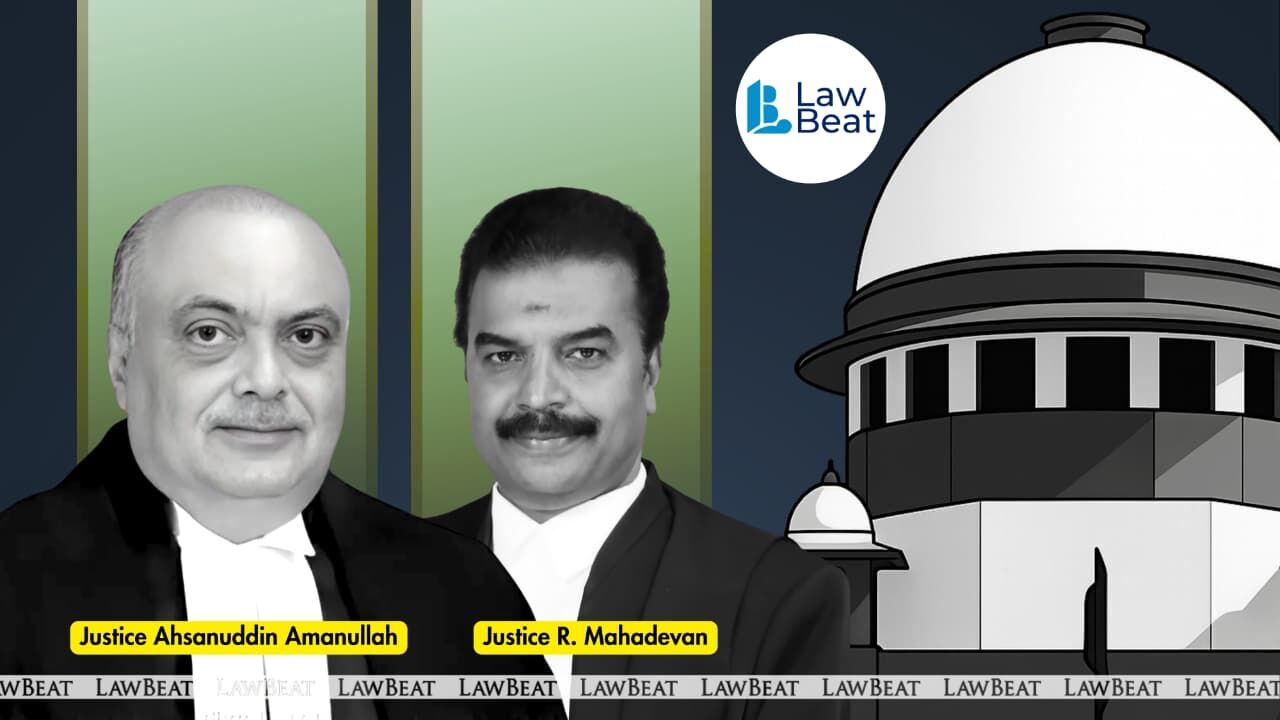
The Supreme Court has held that when a post is specifically reserved for candidates with lower educational qualifications, allowing a person with higher qualifications to secure that job would unfairly deprive a genuinely eligible and deserving candidate of the opportunity.
A Bench of Justices Ahsanuddin Amanullah and R. Mahadevan upheld the dismissal of an employee who had allegedly suppressed his higher educational qualifications while applying for a post that expressly barred candidates possessing qualifications beyond a prescribed limit.
“The rationale behind prescribing an upper limit of qualification is both reasonable and equitable, namely, to provide employment opportunities to persons who, owing to circumstances of life, could not pursue higher education. The State, as a model employer, is justified in reserving certain categories of posts for such persons so that they are not compelled to compete with more highly qualified candidates against whom they would ordinarily stand little chance of selection,” the Bench observed.
Also Read| Supreme Court: Probation Doesn’t Erase Conviction, Dismissal From Service Still Valid
Court noted that such a policy has consistently been upheld by courts.
“Thus, when the post was specifically intended for candidates possessing lower educational qualifications, permitting a person with higher qualifications to secure such employment would necessarily result in depriving a genuinely eligible and deserving candidate of the opportunity,” it added.
What was the dispute before the Supreme Court?
The case arose from a challenge to a Madras High Court judgment which had upheld an April 16, 2025 order of a single judge.
The single judge had set aside an October 30, 2018 dismissal order and directed the reinstatement of respondent K. Poovarsan in service with continuity of service and other consequential benefits, though without back wages.
Poovarsan had been appointed as a temporary attender. The recruitment notification specifically required candidates to have passed the 8th Standard but not the 12th Standard, and they should not possess any higher qualification.
Also Read| Mere Conviction Not Enough for Dismissal If Offence Lacks Moral Turpitude: MP High Court
However, while registering with the Employment Exchange, Poovarsan disclosed only that he had passed the 10th Standard, despite admittedly being a graduate.
The appellants argued that this amounted to suppression of material facts and constituted fraud at the very foundation of his appointment.
On the other hand, Poovarsan contended that he had disclosed his 10th Standard qualification and had not deliberately concealed any information. He further argued that after joining service, he had sought permission from the employer to pursue graduation and such permission had been granted.
Why did the Supreme Court restore the employee’s dismissal?
After examining the record, tCourt held that even if it were assumed there was no deliberate attempt to mislead the authorities at the initial stage, the respondent was nevertheless ineligible for the post because he possessed qualifications beyond the prescribed limit when his name was sponsored by the Employment Exchange.
“Though we may have sympathy for the respondent, the conduct attributed to him and the settled position of law leave us with no option but to interfere with the impugned judgment. Public employment must be made available to all eligible candidates in accordance with the prescribed qualifications,” the Bench said.
Court observed that once it came to light that the respondent possessed qualifications beyond the permissible limit, he ceased to be eligible for consideration itself.
“Once it came to light that on the date his name was sponsored by the Employment Exchange, the respondent possessed qualifications beyond the permissible limit, he ceased to be eligible for consideration itself. Consequently, he could not have proceeded to the next stage of selection, and any subsequent action taken by the appellants would not create any enforceable right in his favour to continue in service,” the Bench said.
Also Read| SC Restores Dismissal of Postal Employee for Embezzlement, Says HC ‘Exceeded Judicial Review’
Court also found it significant that while filling up the attestation form, despite a clear requirement to disclose all educational qualifications acquired from school onwards, the respondent disclosed only that he had passed the 10th Standard in 2012.
“Had the respondent acted in good faith and without awareness of the eligibility restriction, there would have been no reason for him not to disclose his entire educational record. The omission to do so raises serious doubts regarding his bona fides,” the Bench observed.
Further, Court noted that after entering service, the respondent sought permission to pursue graduation, despite already being a graduate. According to the bench, this suggested that he intended to create the impression that he did not possess a graduate degree at the time of appointment and planned to acquire it only later.
“This circumstance also suggests that the respondent intended to project that he did not possess a graduate degree at the time of entry into service and that he intended to acquire such qualification only thereafter for future career advancement. Such conduct reinforces the inference that the respondent was conscious of the fact that disclosure of his actual qualification would have rendered him ineligible for appointment to the post in question,” Court said.
Allowing the appeal, the Supreme Court set aside the high court’s order and restored the respondent’s dismissal from service.
Case Title: General Manager (HR) & Anr Vs K Poovarsan
Bench: Justices Ahsanuddin Amanullah and R Mahadevan
Date of Judgment: May 19, 2026