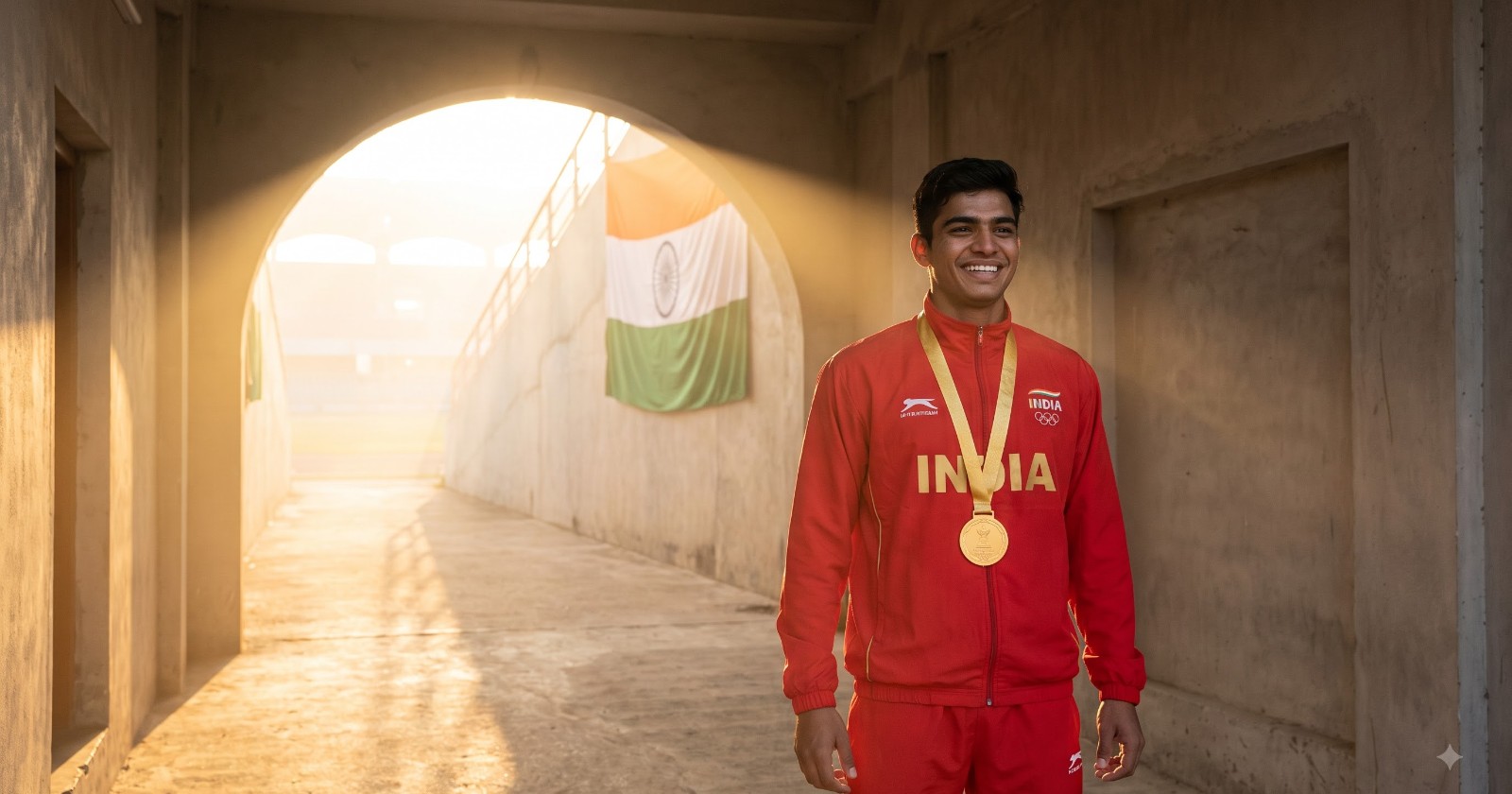
The Commonwealth Games 2026 in Glasgow gave Indian sport fans a lot to cheer — India’s medal count had reached 17 by 31 July, with athletics, boxing, judo and weightlifting all adding to the pile, and the Games running to 2 August.
But here is the angle most feeds skip, and the one that matters to our readers: a large share of India’s medallists are government employees. For many of them, sport and a sarkari job are two sides of the same coin. Here is how that works — and why it matters if you or your child play a sport seriously.
Start with the biggest name
Take Neeraj Chopra, the face of Indian athletics. He is not just a star thrower — he is a soldier. He joined the Indian Army in 2016 as a Naib Subedar (a junior commissioned officer), was promoted to Subedar and then Subedar Major, and now holds the honorary rank of Lieutenant Colonel, which took effect in April 2025.
That is the pattern in a nutshell: a top athlete gets a stable government job, a monthly salary, and promotions tied to their sporting achievements. You can see how defence pay stacks up by rank on the Defence Salary Calculator.
The “sports quota” — a real recruitment route
Beyond the Army, the government hires sportspersons through a dedicated sports quota. This is not a favour — it is a formal recruitment channel with reserved vacancies. The big employers are:
- Indian Railways — for decades the single largest employer of sportspersons in the country, through the Railway Sports Promotion Board.
- Central Armed Police Forces (CAPFs) — the CRPF, BSF, ITBP, CISF and SSB all recruit athletes.
- Public sector banks — SBI and others hire national and international players.
- PSUs and the armed forces — ONGC, oil companies and the Army, Navy and Air Force sports units.
A medal at a recognised international event like the Commonwealth Games makes an athlete eligible for these posts. It is a genuine path to a permanent government income — something a sporting career alone rarely guarantees.
For athletes who already hold a government job, a big medal can bring an out-of-turn promotion and a cash award. The central government runs a scheme of special awards for international medal winners, and most state governments announce their own cash rewards — the amounts vary widely from state to state, often running into several lakh rupees for a gold.
So a single medal can mean three things at once: a job (or a better rank), a cash reward, and lasting recognition.
Why this matters to you
If you follow government jobs, this is a route worth knowing — for yourself, a younger sibling, or your child:
- Play at the national level in a recognised sport and keep your certificates.
- Watch for sports-quota vacancies in Railways, CAPFs, banks and PSUs — they are advertised separately from general recruitment.
- Serving employees who compete internationally should check their department’s rules on out-of-turn promotion and cash awards.
India’s CWG 2026 medallists are proof that sport and a secure sarkari career can go together. Behind almost every medal on the tally is not just talent and training — often, it is also a government pay slip.